Planning a trip this year? The hidden costs of road trip travel can easily add hundreds of dollars to your budget. From tolls and parking to hotel fees and unexpected car maintenance, this guide will help you understand the real expenses and how to save money on your next road trip.
By day four, I was already at $1,150. And I hadn’t bought a single souvenir.
No, I didn’t do anything crazy. I didn’t stay in a luxury hotel or eat at fancy restaurants. The money just… disappeared. A $18 parking fee here. A $35 toll there. A resort fee I had never heard of. A flat tire that cost $90 to fix on a Sunday evening.
That is the real truth about road trips. The big costs like fuel and hotel are easy to plan. It is the small, hidden costs that break your budget.
If you are planning a road trip in 2026, this guide is for you. I am going to show you the 7 hidden costs that almost every traveler forgets, with real examples, real numbers, and simple ways to avoid them. This is not a perfect, textbook guide. This is what I learned the hard way, so you don’t have to.
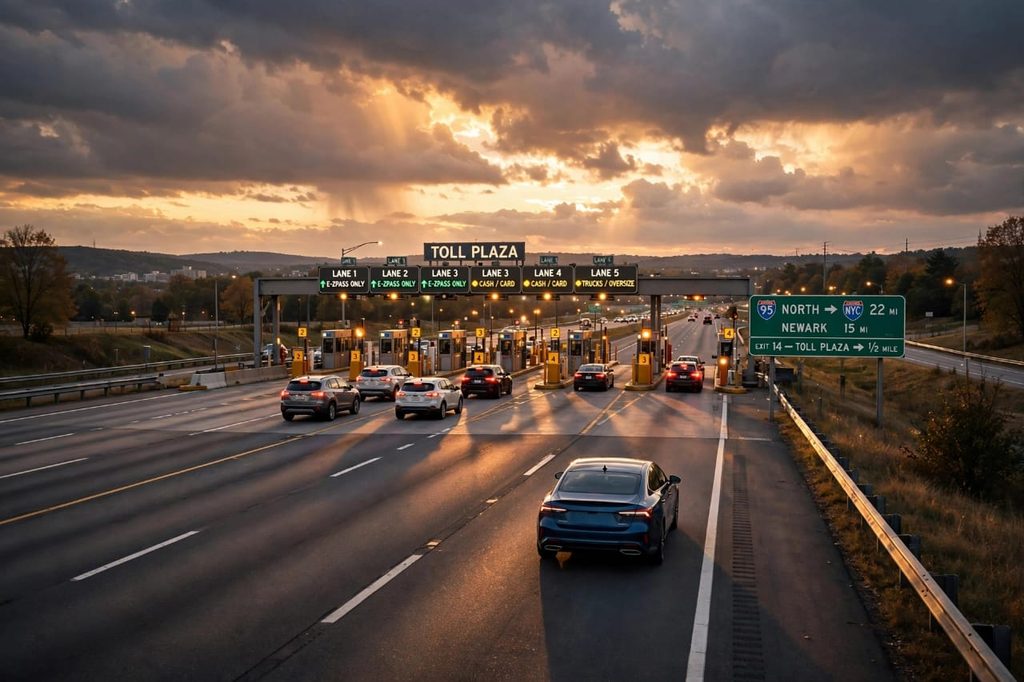
Table of Contents
Why Your Road Trip Budget Always Goes Wrong?
Most people make the same mistake I made. They calculate only 3 things:
- Fuel
- Hotel
- Food
That looks simple and clean. But a real road trip has at least 10-12 different expenses. When you ignore the small ones, they add up to 25-40% extra.
For example, a 1,000-mile road trip for 2 people can look like $700 on paper. In reality, it often becomes $950 to $1,100 once you add tolls, parking, park entry fees, tips, and that one emergency you never planned for.
The good news is, once you know about these hidden costs, you can plan for them. And a planned cost is no longer a hidden cost. Many travelers forget that the hidden costs of road trip planning include food stops, tolls, and last-minute hotel bookings.
Let’s go through them one by one.
1. Tolls – The Hidden Costs of Road Trip You Forget Until You Are On The Highway
This was my biggest shock. I was driving from New York to Washington DC, enjoying the highway, and suddenly I saw a toll plaza. $14. Then another one. $9. Then another one. $12.
By the end of the day, I had paid $58 just in tolls. I had budgeted $0 for tolls.
How Much Do Tolls Really Cost in 2026?
It depends completely on where you drive:
- Northeast USA (New York, New Jersey, Pennsylvania): $40 to $90 for a 300-400 mile trip. This is the most expensive region.
- Florida Turnpike: $25 to $45 for a full trip from Miami to Orlando and back.
- Texas and Midwest: $10 to $30, much cheaper.
- West Coast (California, Oregon): Mostly toll-free, except for a few bridges like Golden Gate Bridge ($9.75).
If you are driving in Europe, it is even more. In France, a 500-mile drive on toll highways can cost $60 to $90. In Italy, it is similar.
How To Save Money On Tolls
- Use Google Maps and turn on “Avoid Tolls” to see the difference. Sometimes the toll-free route is only 20 minutes longer but saves you $30.
- Get an E-ZPass or SunPass before your trip. Paying with a transponder is often 20-30% cheaper than toll-by-plate, where they mail you a bill with extra fees.
- Check your rental car agreement. Many rental companies charge $5-$10 per day as a “toll convenience fee” on top of the actual toll. That can be $70 extra for a week. Bring your own transponder if you can.
My honest mistake: I once used a rental car in Florida and didn’t know about the toll fee. I got a $120 bill one month after my trip. $40 was tolls, $80 was the rental company’s service fee. I was angry, but it was my own fault for not reading the fine print.
2. Parking Fees – The Silent Budget Killer in Big Cities
Parking is the cost that no one talks about. When you are at home, you park for free. On a road trip, especially in big cities, parking can cost more than your food for the day.
In New York City, a hotel parking garage can cost $60-$80 per night. In San Francisco, it is $40-$60. In Chicago, $35-$50. Even in smaller tourist towns like Bar Harbor, Maine or Sedona, Arizona, you can pay $20-$30 per day just to park near the main attraction.
The Real Example
Let’s say you stay 3 nights in a city:
Hotel: $140 per night = $420
Parking: $55 per night = $165
Your total is not $420. It is $585. That is 39% more, just for parking your car.
How To Avoid Expensive Parking
- When you book a hotel, always search for “free parking” in the filter. This one filter can save you $150-$200 on a trip.
- Stay a little outside the city center. A hotel 15 minutes away with free parking is often $40 cheaper per night AND saves you parking fees.
- Use SpotHero or ParkWhiz app to book parking in advance. It is often 30-50% cheaper than driving up and paying at the gate.
- In national parks, arrive before 9 AM. Not only is parking free in most places, but you also avoid the crowds.
3. Hotel Resort Fees, Taxes, and Cleaning Charges
This is the most annoying hidden cost. You see a hotel on Booking.com for $99 per night. You think, “Great, 3 nights = $297.” Then at checkout, the total is $412.
Why? Because of taxes, resort fees, and cleaning charges that were hidden in small print.
In Las Vegas, resort fees are $35-$50 per night. In Hawaii, they can be $50+. Even in normal US cities, taxes add 12-18% to your hotel bill.
And if you book an Airbnb or Vrbo, it is worse. A $120 per night apartment can become $190 per night after cleaning fee ($80), service fee ($45), and taxes.
How To Protect Yourself
- Always look at the TOTAL price, not the per-night price. On Booking.com, click “See total price” before you decide. By understanding the hidden costs of road trip travel in advance, you can set a realistic budget and avoid surprises on the road.
- Call the hotel directly and ask: “Is there any resort fee or parking fee?” This 30-second call can save you a surprise.
- For stays of 3 nights or less, a hotel is often cheaper than Airbnb because of the cleaning fee. For stays of 5+ nights, Airbnb becomes cheaper.
4. Food Costs – More Than Just 3 Meals A Day
Everyone budgets for breakfast, lunch, and dinner. Nobody budgets for everything in between.
Coffee at a gas station: $4.50. A bottle of water because you forgot yours: $3. A bag of chips because the kids are bored: $6. An ice cream because you passed a nice shop: $7.
These small purchases don’t feel like real spending, but over a 5-day trip, they can easily add $100-$150.
My Personal Rule That Saved Me $200
On my last road trip, I made one simple rule: We will eat one proper restaurant meal per day, and the other two meals will be from our cooler.
I packed a real cooler, not just a bag. Bread, cheese, boiled eggs, fruit, sandwiches, and a big water bottle. We ate lunch at beautiful picnic spots instead of fast-food parking lots. It was not only cheaper, it was actually more enjoyable. The kids remember that lakeside picnic more than any restaurant.
Real numbers for a family of 4:
Eating all meals out: $180-$220 per day
1 restaurant meal + 2 cooler meals: $90-$110 per day
Saving in 5 days: $450-$550
That is the difference between a stressful trip and a comfortable trip.
5. Car Maintenance, Breakdowns, and Wear and Tear
Your car is not free to run. Even if you own it, a road trip puts real wear on it.
Before the trip, you might need an oil change ($60-$90), new wiper blades ($25), or tire rotation ($40). On the trip, a small stone can crack your windshield. A nail can puncture your tire. On my second road trip, my check engine light came on in the middle of nowhere in Nevada. That repair cost $220 and one full day of my trip.
What You Should Budget For Car
- Pre-trip checkup: $100-$250 (oil, tires, brakes, coolant, battery)
- Emergency fund: At least $200-$300, or 10-15% of your total budget
- Car wash after trip: $15-$25 (road trips make your car very dirty)
- Extra mileage: If you have a leased car, check your mileage limit. Over-mileage charges are $0.20-$0.30 per mile.
If you are renting a car, check the insurance. The rental company will try to sell you insurance for $20-$30 per day. But your credit card or personal car insurance might already cover you. Check before you pay twice.
6. National Park Fees, Activities, and Tourist Traps
“I thought national parks were free.” I thought the same thing. They are not.
Most major US national parks charge $30-$35 per vehicle for a 7-day pass. If you visit 3 parks on one trip, that is $105. If you visit Yellowstone, Grand Teton, and Glacier, you will pay $105 just for entry.
Then there are activities. A 1-hour kayak rental: $40. A guided tour: $65 per person. A theme park ticket: $110 per person. It adds up very fast.
The Smart Way To Save
Buy the America the Beautiful Pass for $80. It gives you unlimited entry to all US national parks and federal lands for one full year. If you visit 3 or more parks, it already pays for itself. I bought it on my last trip and saved $55.
Also, always check for free days. National parks have 5-6 free entry days per year. And many museums have one free day per week.
My advice: Pick 1-2 paid activities that you REALLY want to do, and enjoy the rest for free. Hiking, viewpoints, beaches, and small-town walks are free and often more memorable than expensive tours.
7. Phone, Data, Tips, and The “Just This Once” Fund
This is the category I call the “invisible” cost.
- Tips: In the USA, you are expected to tip 18-20% at restaurants, $2-$3 per bag for hotel porters, $3-$5 per day for housekeeping. For a 5-day trip, tips alone can be $80-$120.
- Data and Roaming: If you travel internationally, roaming can be $10 per day. A local eSIM for $20 can save you $50.
- Souvenirs: You tell yourself “just one magnet.” Then you buy a t-shirt, a local honey jar, and a toy for your nephew. Budget $50-$100 for souvenirs, or you will overspend.
- Laundry: For trips longer than 7 days, you will need laundry. Hotel laundry is $4-$8 per item. A laundromat is $8-$15 per load. Much cheaper.
The 10% Emergency Buffer Rule
This is the single best tip from this whole article.
Whatever your total budget is, add 10-15% on top as an emergency buffer. If your calculated budget is $1,000, plan for $1,100-$1,150.
You will probably need it. And if you don’t need it, you come home with extra money, which feels great. But if you don’t have it and you need it, your whole trip becomes stressful.
I learned this the hard way. Now I never travel without a buffer.

Pros and Cons of Planning For Hidden Costs
Some people say, “Why worry so much? Just go and enjoy.” I understand that feeling. Over-planning can also kill the fun. So let’s be honest about both sides.
Pros – Why This Is Worth It
- No Stress: You enjoy the trip instead of checking your bank balance every night.
- More Freedom: When you know your real budget, you can actually afford one nice splurge, like a good dinner, without guilt.
- No Debt: You don’t come home to a credit card bill that surprises you.
- Better Decisions: You can choose cheaper parking or toll-free routes before you leave, not after you pay.
Cons – The Honest Downsides
- Takes More Time: Planning for hidden costs takes 1-2 extra hours before the trip. It is boring work.
- Can Feel Restrictive: If you track every dollar, you might feel like you are not on vacation.
- Estimates Are Not Perfect: Gas prices change, hotels add new fees. You can never predict 100% correctly.
- You Might Over-Budget: Sometimes you plan for $200 extra and spend only $50. That money could have been used for a nicer experience.
My honest opinion: The pros are much bigger than the cons. A little bit of boring planning before the trip gives you a lot of freedom during the trip. Just don’t become obsessed. Plan the big hidden costs, keep a buffer, and then stop worrying and enjoy the drive.
A Real Example – 5-Day Road Trip Budget With Hidden Costs Included
Let’s make this real. Here is a 5-day, 1,200-mile road trip for 2 people, from Los Angeles to Las Vegas and Grand Canyon.
The “Naive” Budget (What Most People Calculate)
- Fuel: $180
- Hotel (4 nights x $110): $440
- Food: $300
- Total Naive Budget: $920
The Real Budget (With Hidden Costs)
- Fuel: $180
- Hotel: $440
- Hotel Taxes + Resort Fees (15% + $25/night): $166
- Food: $300
- Snacks, Coffee, Water: $75
- Tolls + Parking: $95
- National Park Entry (Grand Canyon): $35
- Tips: $85
- Souvenirs: $50
- Emergency Buffer (10%): $143
- Total Real Budget: $1,569
See the difference? $920 vs $1,569. That is $649 more. That is not a small mistake. That is the difference between a happy trip and a trip where you run out of money on day 4.
This is why I wrote this article. I don’t want you to make the same mistake I made.
Final Checklist – How To Avoid Hidden Costs On Your Next Road Trip
Before you leave, do these 7 things. It takes less than one hour:
- Check tolls on Google Maps for your exact route.
- Check if your hotel charges parking or resort fees. Call them.
- Look at the TOTAL price, not per-night price, for Airbnb and hotels.
- Pack a cooler with water, sandwiches, and snacks.
- Get a pre-trip car checkup 2 weeks before you leave.
- Buy America the Beautiful Pass if you visit 2+ national parks.
- Add 10-15% buffer to your total budget and keep it in a separate account.
If you do just these 7 things, you will already save $200-$400 on your next trip.
Conclusion – The Road Trip Is Still Worth It
After reading all these hidden costs, you might think, “Maybe I should just stay home.”
Please don’t think that.
A road trip is still one of the best ways to travel. You get freedom, you see places that planes can’t take you to, you make memories with your family that last for years. The sunset in Monument Valley, the quiet road in Utah, the first time you see the Grand Canyon – no amount of money can buy that feeling.
Hidden costs don’t mean road trips are expensive. They just mean you need to plan honestly. When you plan honestly, the trip becomes cheaper, not more expensive, because you stop wasting money on surprises.
So, use a road trip budget planner, add these hidden costs to your list, keep a small buffer, and then go. Drive slow, stop often, eat at local diners, and enjoy the journey.
Have you ever been surprised by a hidden cost on a road trip? Let me know in the comments – I would love to hear your story. Maybe your mistake can save someone else $200.
Safe travels!
Frequently Asked Questions (FAQs)
What is the biggest hidden cost of a road trip?
Parking and hotel resort fees are usually the biggest hidden costs. Together they can add $150-$300 to a 5-day trip, especially in big cities like New York, San Francisco, or Las Vegas.
How much should I budget for hidden costs on a road trip?
A safe rule is to add 25-30% on top of your fuel + hotel + food budget. If your basic budget is $1,000, plan for $1,250-$1,300 in total. This covers tolls, parking, tips, and small emergencies.
Are road trips cheaper than flying in 2026?
For 2 or more people, driving is usually cheaper for trips under 800-1,000 miles. For solo travelers on long trips over 1,000 miles, flying can be cheaper once you add hotel nights and food. Always compare both options with all hidden costs included.
How can I save money on food during a road trip?
Pack a cooler, cook 1-2 meals per day yourself, and eat only one restaurant meal per day. Avoid buying snacks at gas stations where prices are 50-100% higher. A grocery stop at Walmart can save you $40-$60 per day for a family.
Do I really need travel insurance for a road trip?
For a short domestic road trip, your car insurance and health insurance are usually enough. For a long trip, international trip, or if you are renting an expensive car, travel insurance for $30-$60 is worth it. It covers towing, trip cancellation, and medical emergencies.