Have you ever finished a long road trip in the USA, felt happy about reaching your destination, and then a few weeks later received a toll bill in your mailbox that was two or three times higher than you expected? If yes, you are not alone.
Quick Toll Calculator – USA
Enter your distance and calculate your toll instantly:
*This is an estimate. Actual toll depends on state, route and toll plaza.
This happens to millions of drivers every single year in America. They plan for fuel, they plan for food, they plan for hotels, but they completely forget about tolls. And tolls in the USA are tricky. One state charges $2, another state charges $15 for the same distance. If you do not have an E-ZPass, you pay more. If you miss a payment, you get a fine. If you take the wrong exit, you pay for a road you did not even use.
The good news is that you can avoid almost all of these extra charges. You do not need to be an expert. You just need a little planning and a free tool called a Toll Calculator USA.
In this guide, I will share with you 10 best, practical, and real ways to avoid extra toll charges in the USA. These are the same tricks that regular commuters, truck drivers, and smart road-trippers use every day to save hundreds of dollars per year. Read it till the end, because point number 7 is the one that most people miss, and it can save you the most money.
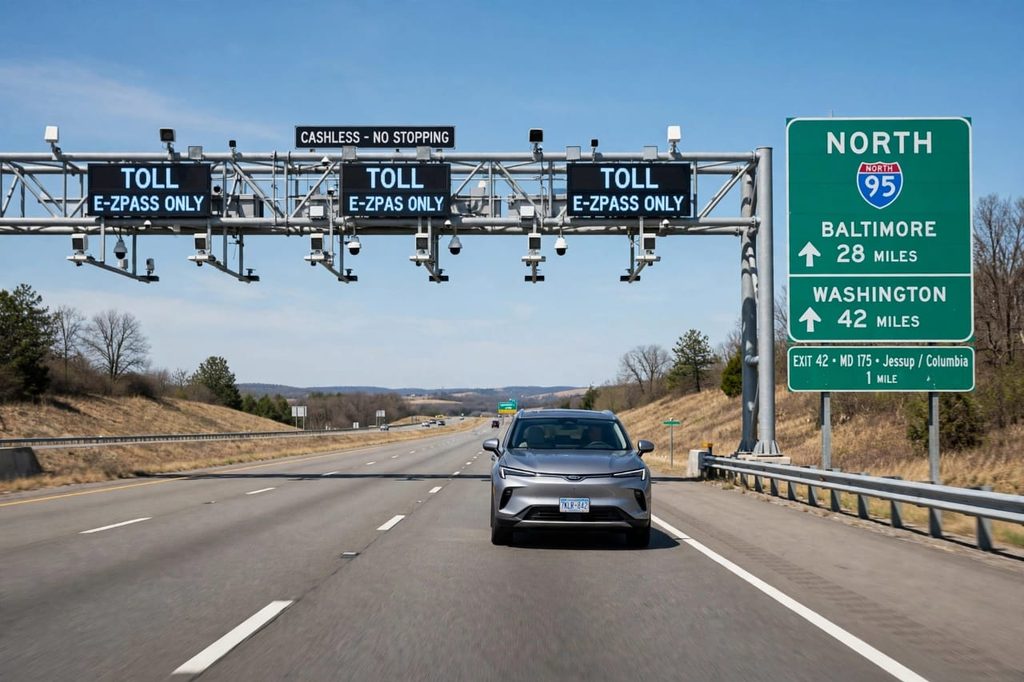
Table of Contents
What is a Toll Calculator USA and Why Does It Matter?
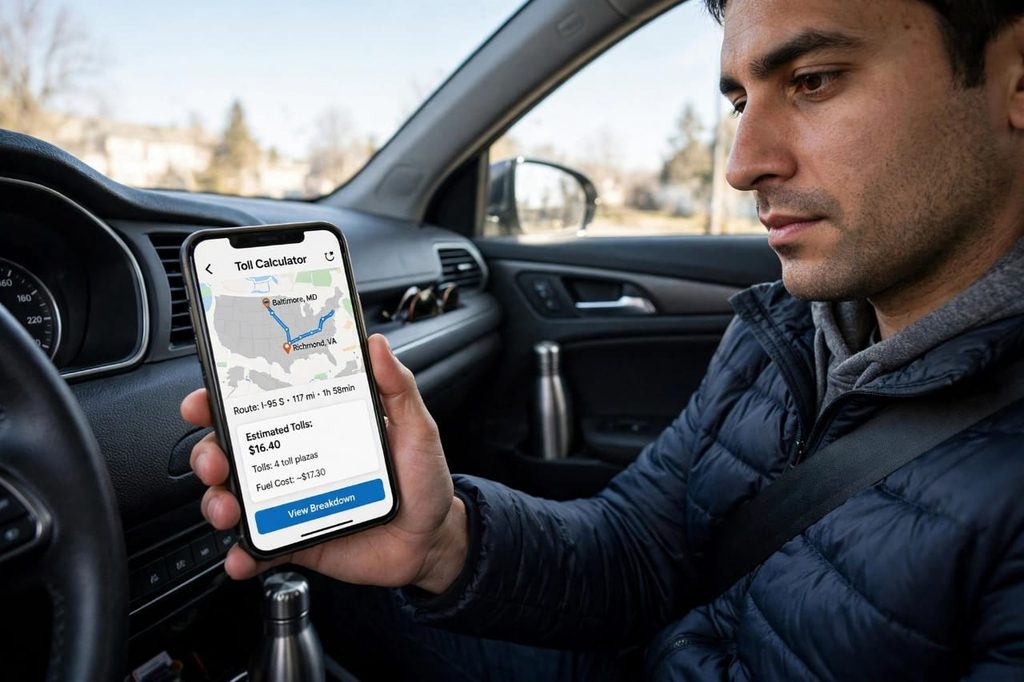
A Toll Calculator USA is a simple online tool. You type your starting point, like New York, and your ending point, like Washington DC. It tells you exactly how much toll you will have to pay on that route, which toll plazas will come, how much fuel will cost, and how much time it will take.
Why does it matter so much? Because in the USA, there is no single toll system. There are more than 40 different toll agencies. New York has its own system, New Jersey has its own, Florida has SunPass, Texas has TxTag, California has FasTrak. If you drive from one state to another without checking, you can easily get confused.
Let me give you a real example. A friend of mine drove from New Jersey to Florida for a family vacation. He thought his toll would be around $30. He did not check before leaving. At the end of the trip, he received toll bills totaling $118. Why? Because he used Toll-by-Plate on many roads, which is almost double the price of E-ZPass. He also missed one toll payment and got a $25 violation fee. A 2-minute check on a Toll Calculator could have saved him almost $60.
That is why smart drivers always check before they drive.
1. Always Check Your Route With a Toll Calculator Before You Leave
This is the number one rule. Never start a long trip without checking your toll cost first.
Before you leave home, open a Toll Calculator USA, enter your start and end location, and compare 2 to 3 different routes. You will be surprised. Sometimes, a route that is only 15 minutes longer can save you $20 in tolls. Sometimes, a route that looks shorter on Google Maps is actually more expensive because it uses 5 toll plazas.
Positive side: You will know your exact budget before you start. No surprise bills later.
Negative side: It takes 2 extra minutes of planning. But those 2 minutes can save you $20, so it is worth it.
Pro Tip: Check the calculator at the same time you will travel. Tolls in many states change based on rush hour. A road that costs $5 at 11 AM might cost $12 at 8 AM.
2. Get an E-ZPass or a Compatible Transponder
If you drive on toll roads more than twice a year in the eastern USA, you must get an E-ZPass. This is the single biggest money-saving trick.
Here is the truth: If you pay with Toll-by-Plate, where cameras take a photo of your number plate and send you a bill, you pay the highest rate. In many states, Toll-by-Plate is 30% to 50% more expensive than E-ZPass. For example, on the New Jersey Turnpike, a trip that costs $12.50 with E-ZPass can cost $19.20 with Toll-by-Plate.
With E-ZPass, you also get discounts, you do not have to stop at toll booths, and you do not get late fees.
Positive side: Instant discount on almost every toll road in 19 states, from Maine to Illinois to North Carolina.
Negative side: You have to pay a small deposit for the device, usually $10 to $25, and you have to keep some balance in your account. Some people forget to recharge and get a violation. So always keep auto-recharge ON.
If you live in Florida, get SunPass. If you live in Texas, get TxTag. If you live in California, get FasTrak. And if you travel across the USA, check if your transponder works in other states. Many now work in multiple states.
3. Use the “Avoid Tolls” Option Smartly, Not Blindly
Google Maps and Waze both have an “Avoid Tolls” option. Many people turn it ON and think they have saved money. Sometimes they have, sometimes they have lost money.
Why? Because the toll-free route is often 45 minutes longer, uses more fuel, and goes through small towns with traffic lights. You might save $8 in tolls but spend $12 extra on fuel and waste one hour of your time.
The smart way is this: First, check the toll route cost on a Toll Calculator. Then check the toll-free route time and fuel cost. If the toll is only $3 and it saves you 40 minutes, pay the toll. If the toll is $25 and it only saves you 10 minutes, take the toll-free route.
Positive side: You have full control over your trip.
Negative side: If you always avoid tolls, you might end up tired and late. Balance is the key.
My personal rule: If toll saves me more than 30 minutes, I pay it. If it saves less than 15 minutes, I avoid it.
4. Travel During Off-Peak Hours to Avoid Dynamic Tolls
This is something most new drivers do not know. In many big cities like New York, Los Angeles, San Francisco, Seattle, and Washington DC, toll prices are not fixed. They change based on traffic. This is called Congestion Pricing or Dynamic Tolling.
For example, on the I-66 Express Lanes in Virginia, the toll can be $4 at 10 AM and $18 at 8 AM during rush hour. Same road, same distance, 4 times the price.
How to avoid this? If possible, travel before 6 AM or after 10 AM. If you are going for a vacation, leave one hour early in the morning. You will not only save toll money, but you will also avoid traffic and reach faster.
Positive side: You save money and you enjoy a stress-free drive with less traffic.
Negative side: It is not always possible. If you have a job, you cannot always change your office timing. In that case, use carpool lanes if your state allows it.
5. Never Ignore a Toll Bill – Pay It On Time
This is the most expensive mistake drivers make in the USA. They get a toll bill of $4 in the mail, they think “It is only $4, I will pay later” and they forget. After 30 days, that $4 becomes $29 because of a $25 late fee. After 60 days, it can become $54 and they can even block your car registration renewal.
In states like New York, New Jersey, and California, toll violations are very strict. They do not forgive easily.
The best way is to set up your account online. Most toll agencies allow you to search by your license plate and pay instantly. Some even send you email and SMS alerts. Turn those alerts ON.
Positive side: You will never pay a fine.
Negative side: You have to check your mail and email regularly. Many people who move houses forget to update their address, so the bill goes to the old house. Always update your address with the DMV.
If you rent a car in the USA, be extra careful. Rental companies charge their own $15 to $25 “convenience fee” for each toll you miss. Always ask the rental company how they handle tolls before you take the car.
6. Use Carpool and HOV Lanes Wherever Possible
If you are traveling with family or friends, you are in luck. Many states in the USA give free or discounted tolls to cars with 3 or more people. These are called HOV or HOT lanes.
In California, on many express lanes, a car with 3+ people travels for free. In Texas, on some roads, carpoolers get 50% off. In Washington, HOV lanes can save you both time and money.
You just need to set your transponder to HOV mode or use the correct lane.
Positive side: You save toll money and you reach much faster because HOV lanes have almost no traffic.
Negative side: If you misuse the HOV lane with only 1 person in the car, the fine is very high, sometimes $200 to $400. Cameras are everywhere now. Never take this risk.
Pro Tip: If you travel daily for work, find a colleague to carpool with. You will split fuel, split tolls, and make the drive less boring.
7. Plan Your Fuel Stops and Toll Stops Together
This is the secret trick that most articles do not tell you. Many drivers pay extra tolls because they exit the highway to get fuel or food, and then they re-enter the highway and pay a new toll.
For example, on the Pennsylvania Turnpike and Ohio Turnpike, your toll is calculated based on where you enter and where you exit. If you exit in the middle for a 10-minute food break and then re-enter, the system sometimes treats it as two separate trips and charges you more.
The smart way: Use the Toll Calculator to see where the official Service Plazas are. Those plazas are inside the toll road. You can get fuel, food, and restroom without exiting the toll system. Your toll remains one single trip.
Positive side: You save extra entry fees and you save time.
Negative side: Food at service plazas is often a little more expensive than outside. But if you save $6 in toll, paying $1 extra for coffee is still a good deal.
8. Compare Rental Car Toll Programs Before You Book
If you are a tourist visiting the USA, this point is for you. Rental car companies have a clever business. They offer you a “Toll Pass” for $12 per day. If you rent a car for 7 days, that is $84, even if you only used $15 worth of tolls.
Before you accept, ask two questions: How much is the daily fee? And what is the maximum fee per rental? Some companies cap it at $60. Some have no cap.
Many times, it is cheaper to bring your own E-ZPass or buy a temporary transponder from a store like CVS or Walmart for $15, and use it in the rental car. Just remember to remove it before you return the car.
Positive side: You can save $50 to $70 on a one-week trip.
Negative side: Setting up your own transponder takes 20 minutes of work. But if you are staying for more than 3 days, it is worth it.
9. Keep Your Transponder Properly Mounted and Your Account Active
I have seen so many people get a fine even though they have an E-ZPass. Why? Because their transponder was in the glove box, or under the seat, or behind a tinted windshield that blocks the signal. The camera then takes a photo and charges them the higher Toll-by-Plate rate.
Always mount your transponder on the windshield, just behind the rearview mirror, as instructed. Check the battery if you have an old one. Most transponders last 5 to 7 years.
Also, check your account balance once a month. If your credit card expires, your auto-recharge will fail, and you will get a violation without knowing.
Positive side: Your tolls will always be charged at the lowest discounted rate.
Negative side: You have to remember to update your card details. It is a small task, but it is very important.
10. Use a Toll Calculator USA for Every State, Not Just Your Home State
The biggest mistake is thinking that toll rules are the same everywhere in the USA. They are not.
Florida’s SunPass does not work on all roads in California. Texas has completely different toll roads. New York has bridge tolls that are very expensive, like the Verrazzano-Narrows Bridge which costs more than $19 without E-ZPass.
Before you drive into a new state, take 5 minutes to check that state’s toll rules on a Toll Calculator. Check: Do they use cash? Do they accept E-ZPass? Is there a Toll-by-Plate fee? What is the fine for missing a payment?
Positive side: You will never be surprised by a new state’s rules.
Negative side: It requires a little research. But that research is exactly what separates a smart traveler from a traveler who pays extra.
Real Example: How Much Can You Actually Save?
Let us do a quick calculation for a normal family.
Suppose you drive from New York to Washington DC and back, once a month for work. Without E-ZPass and without planning, your toll cost per round trip is around $62 with Toll-by-Plate and fines.
With E-ZPass, off-peak travel, and route planning with a Toll Calculator, your cost drops to around $38 per round trip.
You save $24 per trip. In one year, you save $288. In 3 years, you save $864. That is enough for a free family vacation.
That is the real power of planning.
Pros and Cons of Using Toll Roads in the USA
To be fair, we must talk about both sides. Toll roads are not always bad.
Pros of Toll Roads:
They are usually in much better condition. The roads are smooth, clean, and well-lit.
They have less traffic, so you reach faster and with less stress.
They have better emergency services and more service plazas.
They save you fuel because you are not stuck in stop-and-go traffic.
Cons of Toll Roads:
They can be very expensive, especially for daily commuters.
The system is confusing because every state has different rules and different transponders.
Toll-by-Plate bills can come very late, and fines are too high for small mistakes.
If you do not have a transponder, you pay the highest price, which feels unfair.
The conclusion is simple: Toll roads are great if you use them smartly. They are expensive if you use them blindly.
Final Checklist Before Your Next Trip
Before you start your car, check these 5 things:
- Have you checked your route on a Toll Calculator USA?
- Is your E-ZPass or SunPass or TxTag active and properly mounted?
- Is your auto-recharge ON and your credit card valid?
- Do you know if your route has dynamic tolls during rush hour?
- Have you compared the toll route vs toll-free route for time and fuel?
If your answer is yes to all 5, then you are ready. You will not pay a single dollar extra.
Conclusion
Avoiding extra toll charges in the USA is not about luck. It is about habit. The drivers who save money are not richer or smarter. They just spend 5 minutes checking before they drive.
Use a Toll Calculator USA, get the right transponder, travel at the right time, pay your bills on time, and always compare your routes. Do these 10 things, and you will save hundreds of dollars every year.
Your next road trip does not have to be expensive. Plan it smartly, drive safely, and enjoy the journey without worrying about surprise bills in your mailbox.
If you found this guide helpful, share it with a friend who drives a lot. You might just save them $500 this year.
Frequently Asked Questions
How much does a Toll Calculator USA cost to use?
Most toll calculators are 100% free to use. You just enter your start and end points and it shows you the cost.
Is E-ZPass valid in all USA states?
No. E-ZPass works in 19 eastern and midwestern states. It does not work in California, Texas, or Florida. For those states, you need their local transponder.
What happens if I miss a toll in the USA?
The camera will capture your license plate and send you a bill by mail. If you do not pay within 30 days, you will get a late fee of $25 or more.
Can I avoid tolls completely in the USA?
Yes, you can use the “Avoid Tolls” option on Google Maps, but it will often make your trip much longer and use more fuel. It is best to compare both options.
Is Toll-by-Plate more expensive than E-ZPass?
Yes, in most states Toll-by-Plate is 30% to 50% more expensive than E-ZPass because you do not get the transponder discount.