LA to San Francisco toll is one of the most searched questions by drivers in California. If you are planning to drive from Los Angeles to San Francisco in 2026 or 2027, you want to know the real LA to San Francisco toll cost before you leave.
I asked the same question before my first trip. I thought California would be full of toll booths like New York or New Jersey. The truth surprised me. And if you take the wrong route, you can end up paying more than you expected — not because of tolls, but because of fuel, traffic, and express lanes.
In this guide, I will break down the real toll cost from LA to San Francisco for 2026/27, route by route, with FasTrak and without FasTrak, plus the total trip cost that most websites never tell you.
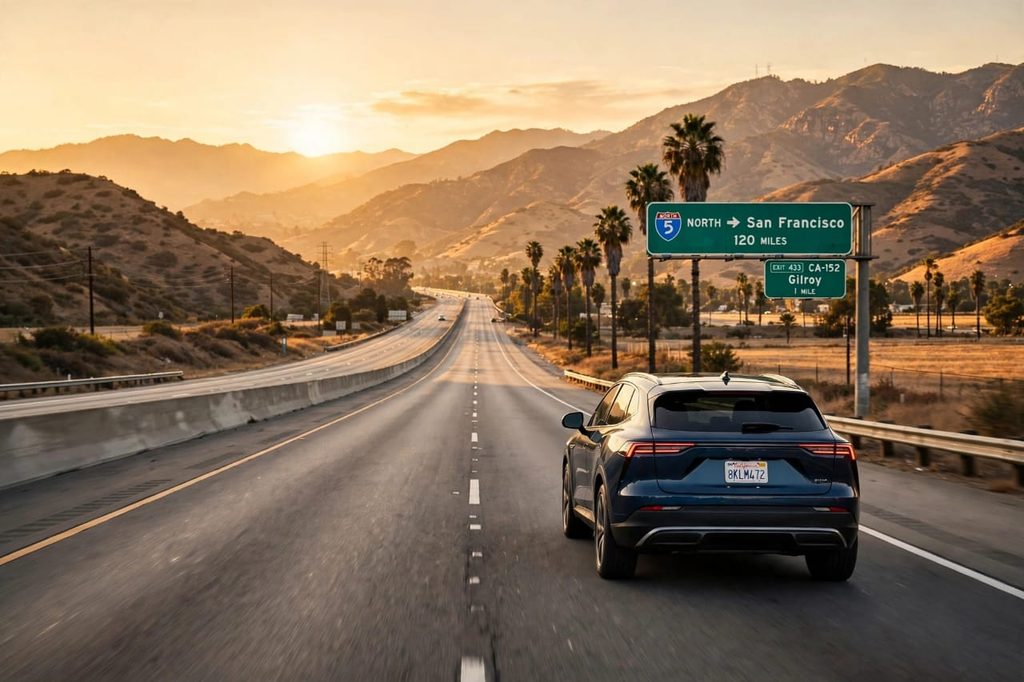
Table of Contents
The Short Answer: How Much is Toll From LA to San Francisco?
For most drivers in 2026/27, the toll from LA to San Francisco is $0 to $11.50 one-way.
Yes, you read that right.
If you take the fastest route, I-5 North, you will pay $0 in tolls. There are no toll booths on I-5 between LA and San Francisco.
If you take the scenic coastal route, US-101 and Highway 1, you will still pay $0 for most of the way, unless you cross the Golden Gate Bridge into San Francisco. That is where the only real toll comes in.
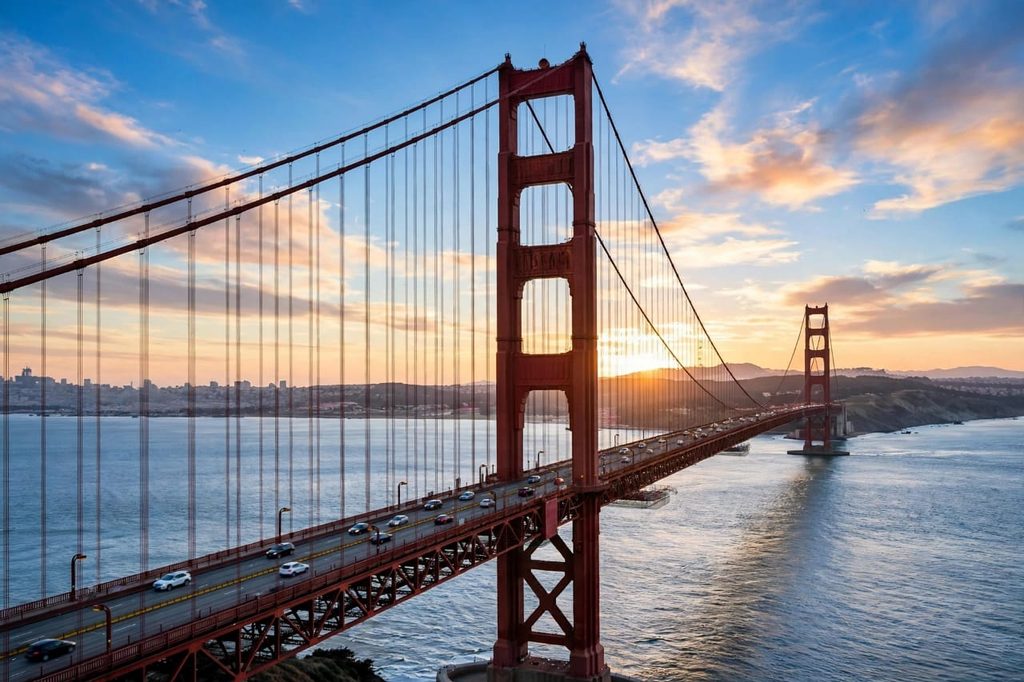
Golden Gate Bridge toll in 2026 is around $9.75 with FasTrak and $11.50 with Pay-By-Plate (license plate billing) for a regular 2-axle car. If you are coming from the south and you do not cross the Golden Gate Bridge, your toll is $0.
So the honest answer is: LA to San Francisco is one of the cheapest toll trips in America. The expensive part is not the toll. It is gas, food, and time.
Why Do So Many People Get Confused About This Toll?
When I searched this myself, I saw websites showing $25, $40, even $60 in tolls for this trip. That confused me a lot.
Here is why that happens:
Many toll calculator websites add express lanes, HOT lanes, and Bay Area bridges together and show you the maximum possible cost. They assume you will use every paid lane from LA to SF. In real life, almost no one does that.
In Los Angeles, there are Metro ExpressLanes on I-110 and I-10. In the Bay Area, there are express lanes on I-580, I-680, and US-101. If you use all of them during peak hours, yes, you can pay $20 to $35 extra. But they are optional. You can stay in the free lanes and pay nothing.
That is the biggest misunderstanding. In California, express lanes are a choice, not a requirement. In New York, you cannot avoid the toll. In California, you can.
Route 1: I-5 North – The Fastest and Cheapest Route
Distance: 381 to 385 miles
Driving Time: 5 hours 45 minutes to 6 hours 30 minutes without stops
Toll Cost: $0
Total Fuel Cost: $52 to $68 for a normal sedan
This is the route most Californians take. You leave LA on I-5 North, pass through Grapevine, Bakersfield, Kettleman City, and then take I-580 West to the Bay Area.
What I love about I-5:
It is straight, fast, and simple. You set your cruise control and you just go. There are plenty of gas stations, In-N-Out, Starbucks, and rest stops. If you are driving with family, this is the stress-free route.
What I do not love about I-5:
Let me be honest. I-5 is boring. For almost 200 miles, you will see flat farmland, almond trees, and trucks. There is no ocean view. In summer, it gets brutally hot around Bakersfield and Kettleman City — I have seen 104°F there. And the Grapevine section can close in winter due to snow or heavy wind, which can add 2 hours to your trip.
But if your goal is to reach San Francisco fast and cheap, I-5 wins every time.
My personal tip: Leave LA before 6 AM. If you leave at 8 AM, you will hit LA traffic, then Bay Area traffic, and your 6-hour trip becomes 8 hours. I learned this the hard way on my second trip.
Route 2: US-101 North – The Balanced Route
Distance: 420 to 430 miles
Driving Time: 6 hours 30 minutes to 7 hours 30 minutes
Toll Cost: $0 if you avoid Golden Gate Bridge, $9.75 to $11.50 if you cross it
Total Fuel Cost: $60 to $78
US-101 is my favorite middle option. It goes through Santa Barbara, San Luis Obispo, Paso Robles, Salinas, and San Jose, then into San Francisco.
What I love about US-101:
It is much prettier than I-5. You get hills, vineyards, small towns, and better weather. The road feels more like a road trip and less like a highway commute. There are great stops — Solvang, Pismo Beach, and Paso Robles wine country.
What I do not love about US-101:
It is slower. There are more traffic lights in some sections, more small-town slowdowns, and in the evening, US-101 near San Jose gets jammed. You will burn more fuel and spend about one hour extra compared to I-5.
If you are not in a hurry and you want to actually enjoy the drive, take US-101. I take this route when I have friends visiting from out of state.
Route 3: Highway 1 / Pacific Coast Highway – The Most Beautiful, But Longest
Distance: 440 to 460 miles
Driving Time: 9 to 11 hours
Toll Cost: $0 to $11.50 (Golden Gate Bridge only)
Total Fuel Cost: $68 to $90
Highway 1 is the route you see on Instagram. Big Sur, Bixby Creek Bridge, McWay Falls, cliffs dropping into the Pacific Ocean. It is unreal.
What I love about Highway 1:
It is, without exaggeration, one of the most beautiful drives in the world. I stopped at least 10 times on my first PCH trip just to take photos. If you have never done it, you have to do it once in your life.
What I do not love about Highway 1:
It is slow, curvy, and tiring. You cannot drive fast. In some parts, the road is one lane each way with no shoulder. If you get carsick, you will suffer. And in winter or after heavy rain, parts of Highway 1 near Big Sur often close due to landslides. In 2023 and 2024, it was closed for months.
My honest advice: Do not take Highway 1 if you have to be in San Francisco the same night for a meeting or flight. Take it when you have 2 days. Stay one night in Monterey or Cambria. That way you enjoy it instead of rushing it.
Golden Gate Bridge Toll Explained in Simple Words (2026/27)
This is the only real toll most LA to SF drivers pay.
If you enter San Francisco from the north (from Sausalito), you pay to cross the Golden Gate Bridge going southbound. If you are leaving San Francisco going north, it is free.
There is no cash booth anymore. The system is all-electronic.
- With FasTrak: Around $9.75 for a car
- Pay-By-Plate (bill by mail): Around $11.50 for a car
- With carpool 3+ during carpool hours: Discount available, but rules change, check before you go
If you are driving a rental car, be careful. Rental companies often charge you a $15 to $25 “convenience fee” on top of the toll if you use Pay-By-Plate. I have seen friends get a $35 bill for a $11.50 toll. Ask your rental company if their car already has a FasTrak transponder.
How to avoid the Golden Gate Bridge toll completely? Use I-580 to Richmond-San Rafael Bridge, or come via I-80 and Bay Bridge from the East Bay. The Bay Bridge also has a toll ($7 to $8 with FasTrak), so you are not really saving much. The only true $0 route is I-5 to I-580 to I-80, entering SF from the east without crossing Golden Gate.
FasTrak vs Without FasTrak: Which is Better for Tourists?
If you live in California, get FasTrak. It saves you money on every bridge and express lane. It costs $0 to $20 for the transponder depending on the plan, and you can use it statewide.
If you are a tourist visiting for 3-4 days, do not buy FasTrak just for this one trip. You will pay $11.50 once, and that is it. It is not worth the hassle.
But if you are planning to drive in LA, San Diego, and the Bay Area for a week and use express lanes, then FasTrak Flex is worth it. It lets you switch between solo and carpool mode.
One mistake I see tourists make: They think they need FasTrak for I-5. You do not. I-5 has no toll. You only need it for bridges and optional express lanes.
Total Trip Cost From LA to San Francisco (Not Just Toll)
This is where most articles lie by omission. Toll is only a tiny part. Here is the real cost for one car, one-way, in 2026/27:
For a Sedan (30 MPG):
- Toll: $0 to $11.50
- Fuel (382 miles, gas $4.20 avg in CA): $53.50
- Food + Coffee: $25 to $40
- Total One-Way: $78 to $105
For an SUV (22 MPG):
- Toll: $0 to $11.50
- Fuel: $73
- Food + Coffee: $25 to $40
- Total One-Way: $98 to $124
For an EV (Tesla Model 3):
- Toll: $0 to $11.50
- Charging (2 stops): $28 to $38
- Food + Coffee: $25 to $40
- Total One-Way: $53 to $90
Return trip? Just double it. Round trip in a sedan will cost you $156 to $210, not counting hotel.
If you are comparing driving vs flying, flying looks cheaper on paper ($59 flight), but once you add Uber to LAX ($35), baggage ($35), Uber in SF ($30), and time at the airport (3 hours), driving often wins for 2+ people.
Best Time to Drive From LA to San Francisco to Save Money and Time
From my experience and from talking to regular commuters:
Best time to leave LA: 5 AM to 6 AM on a weekday, or before 7 AM on Saturday. You will miss LA traffic and arrive in SF before afternoon rush.
Worst time to leave LA: Friday 3 PM to 7 PM. Everyone is going north. Your 6-hour trip becomes 8.5 hours. I did this once and regretted it the whole way.
Best time to return: Sunday before 10 AM, or Monday after 8 PM.
Fuel is also cheaper if you fill up in LA or Bakersfield, not in the Bay Area or Big Sur. Gas in San Francisco is often $0.60 to $0.90 more per gallon than in LA. I always fill up in Kettleman City on the way up.
5 Money-Saving Tips I Wish Someone Told Me Before My First Trip
- Do not use express lanes unless you are really late. They can charge $8 to $15 in peak hours for saving 10 minutes. Not worth it.
- Use GasBuddy before you leave. A $0.40 difference per gallon on a 380-mile trip saves you $5 to $7.
- Pack snacks and water. Rest stop food on I-5 is expensive and not great. A $15 sandwich pack from home saves you $30.
- Check Caltrans Quick Map before you leave. If Grapevine or Big Sur is closed, Google Maps will reroute you late. Caltrans tells you early.
- If you have 2+ people, driving is almost always cheaper than flying. If you are solo and in a hurry, flying is better.
Pros and Cons: Driving vs Flying LA to SF
Driving – Pros:
- You control your time, no airport security
- Much cheaper for 2-4 people
- You can stop in Santa Barbara, Solvang, Big Sur
- No baggage fees
Driving – Cons:
- 6 to 10 hours is tiring, especially alone
- I-5 is boring, PCH is slow
- Parking in San Francisco is $35 to $60 per night, which kills your savings
- Traffic can ruin your plan
Flying – Pros:
- 1 hour 15 minutes flight
- Often $49 to $89 if booked early
- No driving fatigue
Flying – Cons:
- Airport time adds 3 hours total
- Uber + baggage makes it $130+ one-way for one person
- You miss the California coast completely
My honest take: If you have never driven it, drive it at least once via US-101 or PCH. If you do it every month for work, fly.
Frequently Asked Questions (FAQs)
Is there any toll on I-5 from LA to San Francisco?
No. I-5 is completely toll-free from LA to SF. You will not see a single toll booth on this route.
Do I need FasTrak to drive from LA to San Francisco?
No, not unless you want to use express lanes or cross the Golden Gate Bridge at a discount. For I-5, you need nothing.
How much is the Golden Gate Bridge toll in 2026?
Around $9.75 with FasTrak and $11.50 with Pay-By-Plate for a standard car. Prices go up slightly every year, so check before you travel.
Can I pay cash at the Golden Gate Bridge?
No. There are no cash booths. It is all-electronic. They will bill your license plate by mail.
How long does it take to drive from LA to San Francisco?
5 hours 45 minutes via I-5 without stops, 6.5 to 7.5 hours via US-101, and 9 to 11 hours via Highway 1 with stops.
What is the cheapest way to go from LA to San Francisco?
Drive I-5 in a fuel-efficient car, leave early, pack food, and avoid express lanes. Total cost can be under $80 one-way.
Final Verdict: How Much Should You Budget in 2026/27?
If someone asks me today, how much is toll from LA to San Francisco in 2026/27, I tell them this:
Budget $0 for toll if you take I-5. Budget $11.50 if you cross the Golden Gate Bridge. Budget $80 to $110 total for the whole one-way trip in a normal car.
Do not overthink the toll. California is kind to drivers on this route. The real cost is gas and time.
If you are planning this trip, use our free California Toll Calculator above to check your exact route, fuel cost, and travel time before you leave. It takes 30 seconds and it can save you $20 to $40.
Drive safe, leave early, and if you take Highway 1, stop at Big Sur for me. You will thank me later.